
1. Founders talk about themselves instead of the customers
Founders love to tell their story and focus on their journey. Customers don't care about that, they care about their problem and how you can help them solve it.
Branding and the "hero customer"
The strongest brands position the customer as the hero, not the company. Your brand’s role is to be the guide that helps them succeed. If your messaging starts with “we,” you’ve already lost them.
2. They focus on what they do rather than "why they exist"
Most founders focus on:
• What we do
• How we do it
• Why it matters
But the brands people feel connected to flip that order:
• Why we exist
• How we approach the world
• What we offer
People don't attach themselves to products, they attach themselves to belief systems and identities. Simon Sinek preaches that when you focus on the "why" you exist, you start anchoring yourself into the customer's identity. You become an extension of their belief system. And by default become the obvious choice. We are no longer selling technical and specs, but rather the beliefs built on "why we exist".
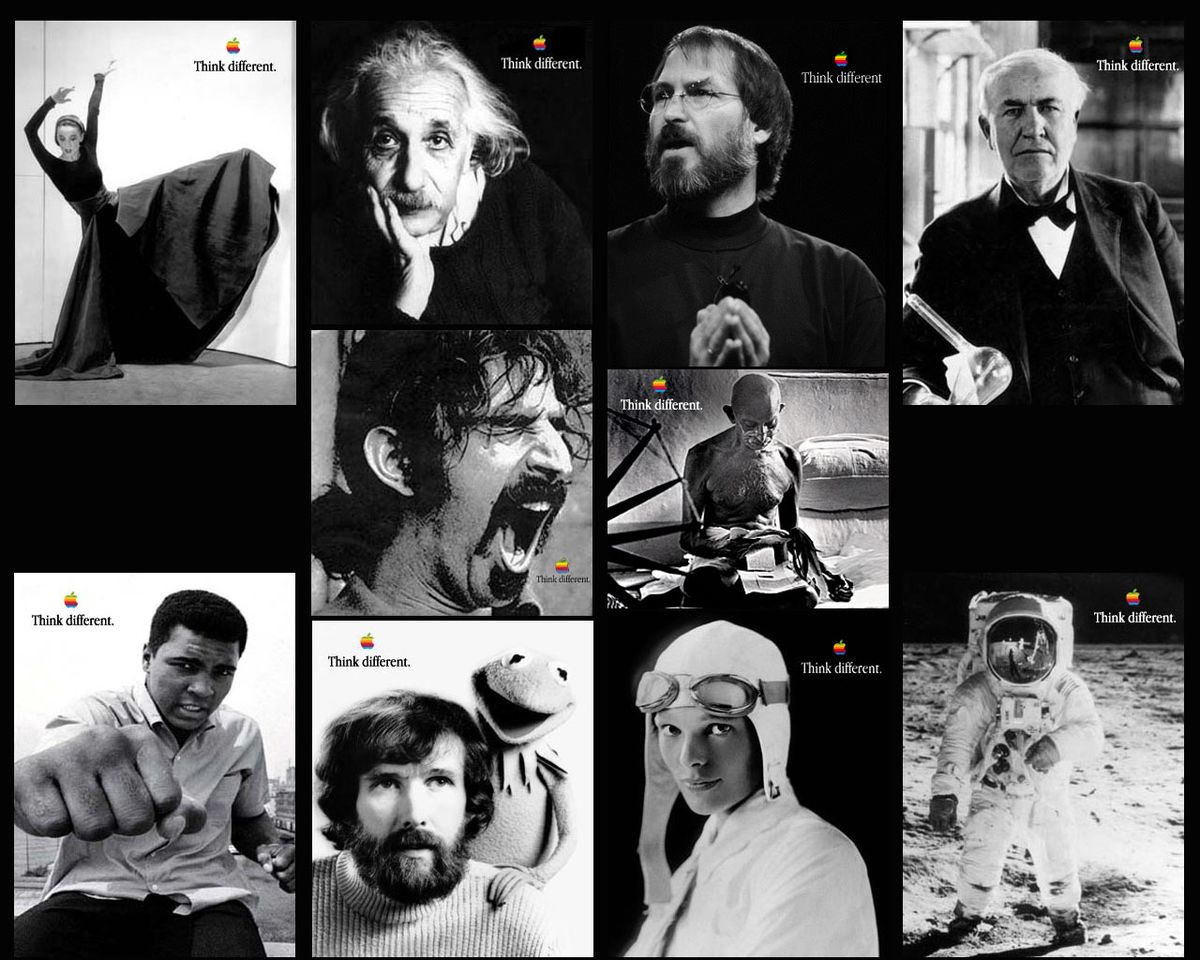
Apple’s iconic “Think Different” campaign revealed their “why,” giving people a belief to align with and strengthening the brand.
3. Trying to appeal to everyone
One of the biggest traps founders fall into is trying to appeal to everyone. But when you are for everyone, you are in fact for no one.
Strong brands are specific, not universal. When a brand tries to please everyone, it becomes invisible. The market doesn’t understand who it’s actually for and moves on. Great brands choose a side, choose a point of view, and choose a clear audience. This is how tribes form.

The image above is showcasing different identities. Who are you for?
4. Founders treat design as decoration rather than strategy
Most founders when they think of design think: a logo, colors, fonts, websites. But design can only become powerful when it is rooted in strategy. Without strategy, design becomes a decoration. It might look nice, but if it doesn’t communicate meaning or create recognition, then it's purposeless.
Design is the visual language of the brand strategy
It's not the starting point. Once you declare who you are, who you're for, and what makes you so special - design then becomes the vessel connecting you with your audience. Your design is how you communicate with your audience before they know much about you. It's the first impression.
5. They confuse differentiation with being slightly better
This is a big one from Marty Neumier. Founders think differentiation means saying things like: better quality, better service, better experience. But “better” isn’t necessarily memorable. Real differentiation in branding comes from standing for something specific. Think:
• A clear point of view
• A clear audience
• A clear belief about how things should be done
When a brand takes this position, the right people recognize it immediately and feel like it was made for them. They instantly connect and choose you.
The goal isn’t to win a tiny comparison battle, because nobody needs that.
It’s to make the decision obvious for the right customer. When your brand stands for something clear, like a belief system or a "Why", people stop comparing and start aligning with you.
It’s about being clearly different in meaning and standing for something.
Interested in getting your brand to where it should be? We offer a service called Brand Sprints, where over the course of 4 weeks we get you to exactly where you need to be with your strategy & identity.
FAQs
Q. What is the most common branding mistake founders make?
The most common mistake is building the brand around the company instead of the customer. When founders focus too much on their product, process, or story, they forget that customers care most about their own problems and goals.
Q. Why doesn’t my branding feel like it’s connecting?
Most of the time, it’s not a design issue. It’s a clarity issue. If your audience can’t quickly understand what you do, who it’s for, and why it matters, they won’t feel connected to it.
Q. Why is brand strategy important before design?
Because design is there to communicate the strategy, not replace it. If the strategy is weak, unclear, or missing altogether, the design might look good but it won’t mean much or drive the right kind of trust.
Q. What happens when a brand tries to appeal to everyone?
It becomes harder for anyone to recognize themselves in it. Broad brands often feel vague, generic, and forgettable. Clear brands are specific, and that specificity is what attracts the right people.
Q. What is real brand differentiation?
Real differentiation is not about being slightly better than the competition. It’s about standing for something clear and specific so the right people immediately understand why your brand is for them.
Q. Why do customers choose one brand over another?
People usually choose emotionally first and justify it with logic afterward. The brands that win make customers feel understood, safe, and aligned with a certain identity or belief.
Q. How do I know if my brand needs strategy work?
If your messaging feels inconsistent, your audience is unclear, your marketing feels like guesswork, or your brand looks good but isn’t converting, you likely need strategy work before anything else.
Ready to discuss your brand strategy?